
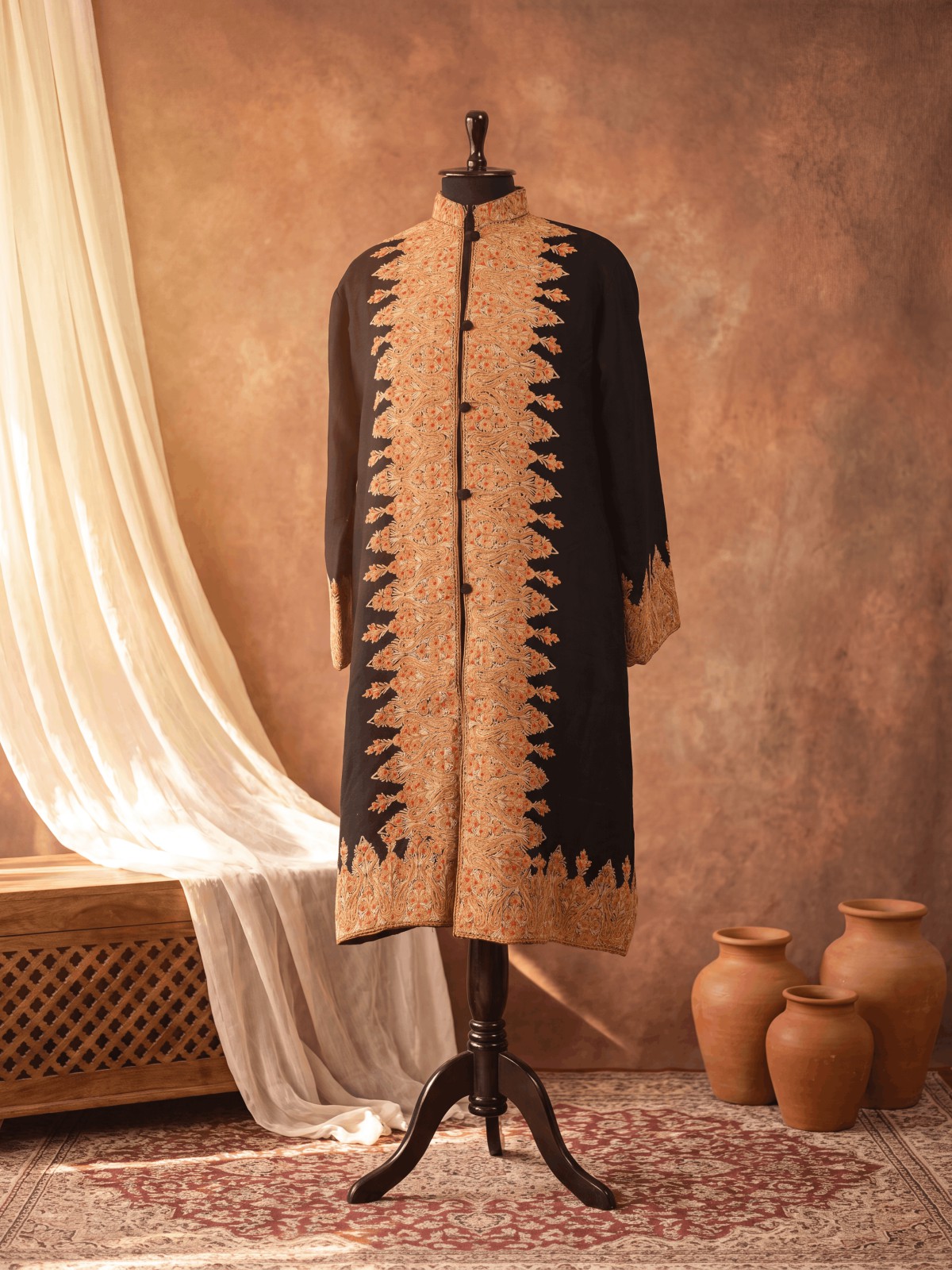
A khilat was not something you bought. It was a robe of honour — presented at court to mark service, alliance or occasion. The garment carried meaning precisely because of who gave it and why.
What that history left behind
Two things survive from it into the pieces we make now.
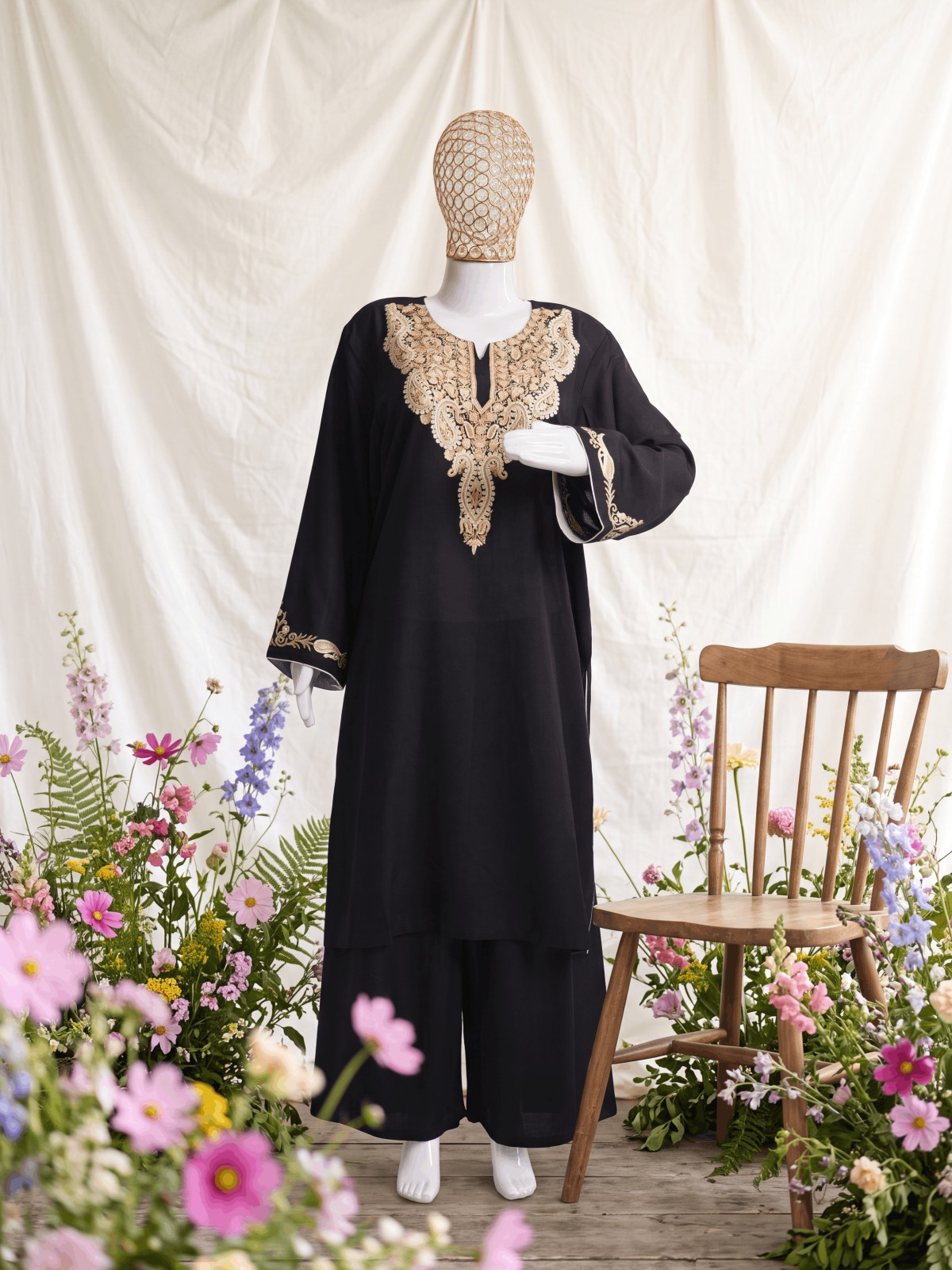
The first is the band collar. It stands rather than folds, which keeps the neckline clean and draws the eye to the embroidery at the chest and shoulder — where the most concentrated work has always gone.
The second is where the decoration sits. On a formal coat the embroidery follows the front opening and the hem, framing the body rather than covering it. That restraint is deliberate: the pattern is meant to read at conversational distance, not to shout across a hall.
Jacket or coat
Our Khilat collection is cut two ways, and the difference matters more than it might look.
- Hip-length jackets read as tailoring. They work over a kurta or a plain shirt, and they can be worn open without losing their line.
- Full-length coats read as ceremony. They fall below the knee with enough weight to hold a straight column, which is why they photograph so well standing still and why they suit weddings and formal evenings.
How to wear one without being overwhelmed by it
- Let the coat be the only pattern. Plain trousers, plain shirt, and the embroidery has room to work.
- For the heavily worked pieces, keep the palette underneath to a single tone drawn from the coat itself.
- Sleeve length matters more than usual — the cuff is often where the border pattern resolves, so it should sit at the wrist rather than over the hand.
Care
Hang on a broad hanger so the shoulders keep their shape, never on wire. Dry clean only, and always with a cleaner who has handled hand embroidery. Store away from damp and out of direct sunlight, which fades thread faster than it fades cloth.
Leave a comment