
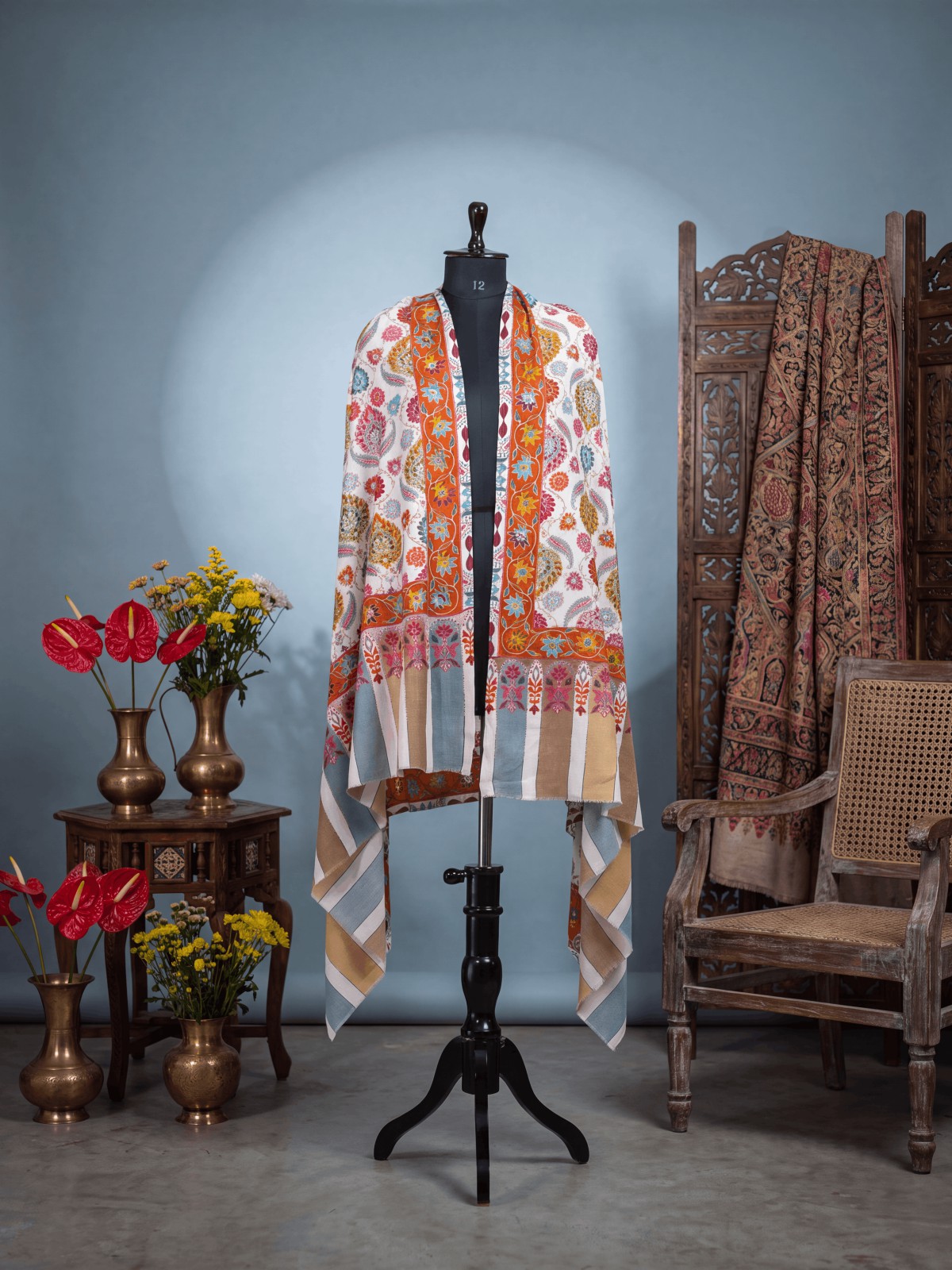
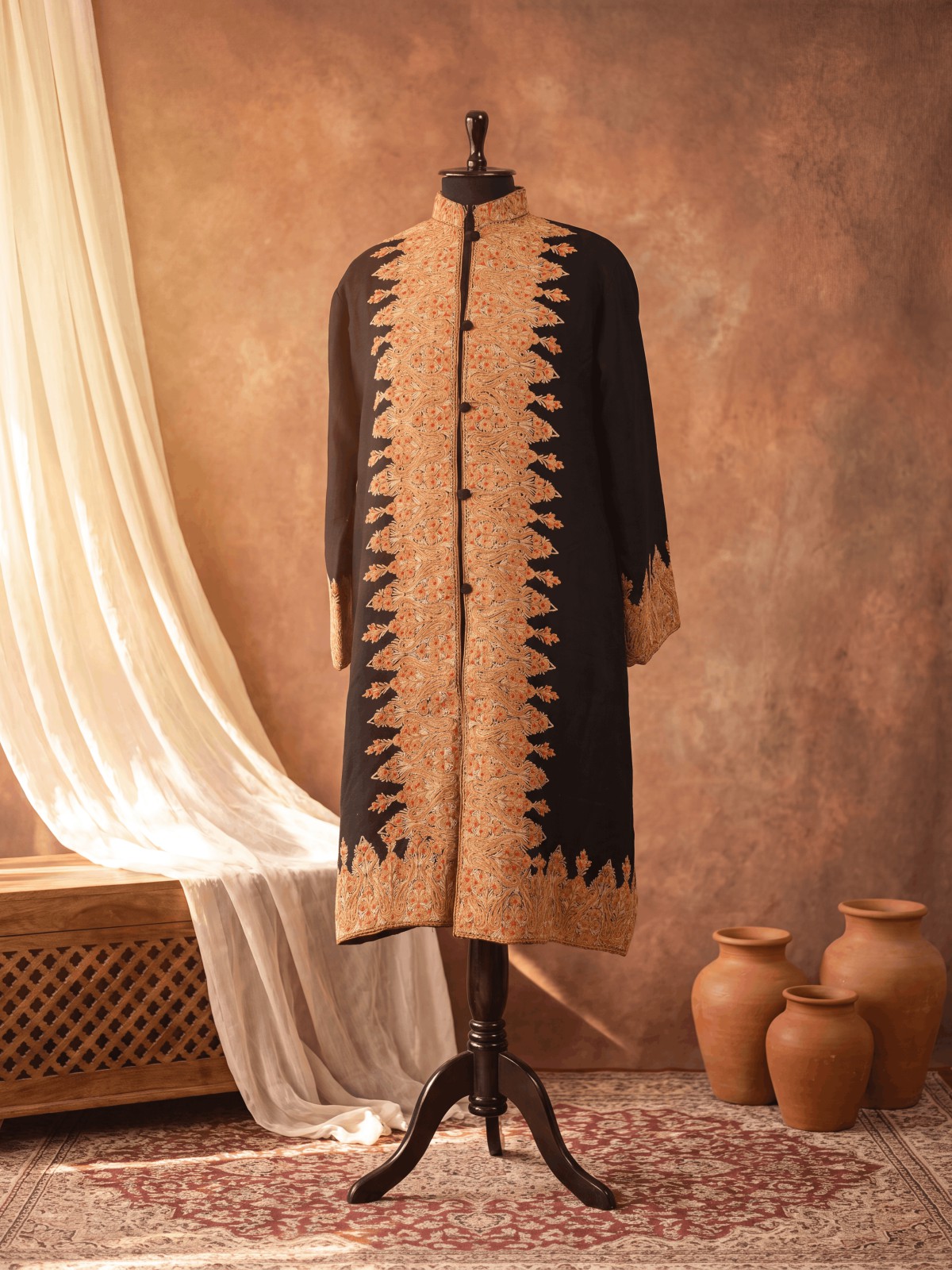
Kashmiri craft has a remarkably consistent visual vocabulary. The same motifs turn up on an embroidered suit, a shawl border and the front of an occasion coat — because the crafts grew up alongside one another, often in the same households. Learn four of them and the whole tradition starts to read differently.
The chinar leaf
The chinar is the great plane tree of the Kashmir valley, and its broad, pointed leaf is close to a regional signature. It turns deep red and gold in autumn, which is why you so often meet it in warm palettes.
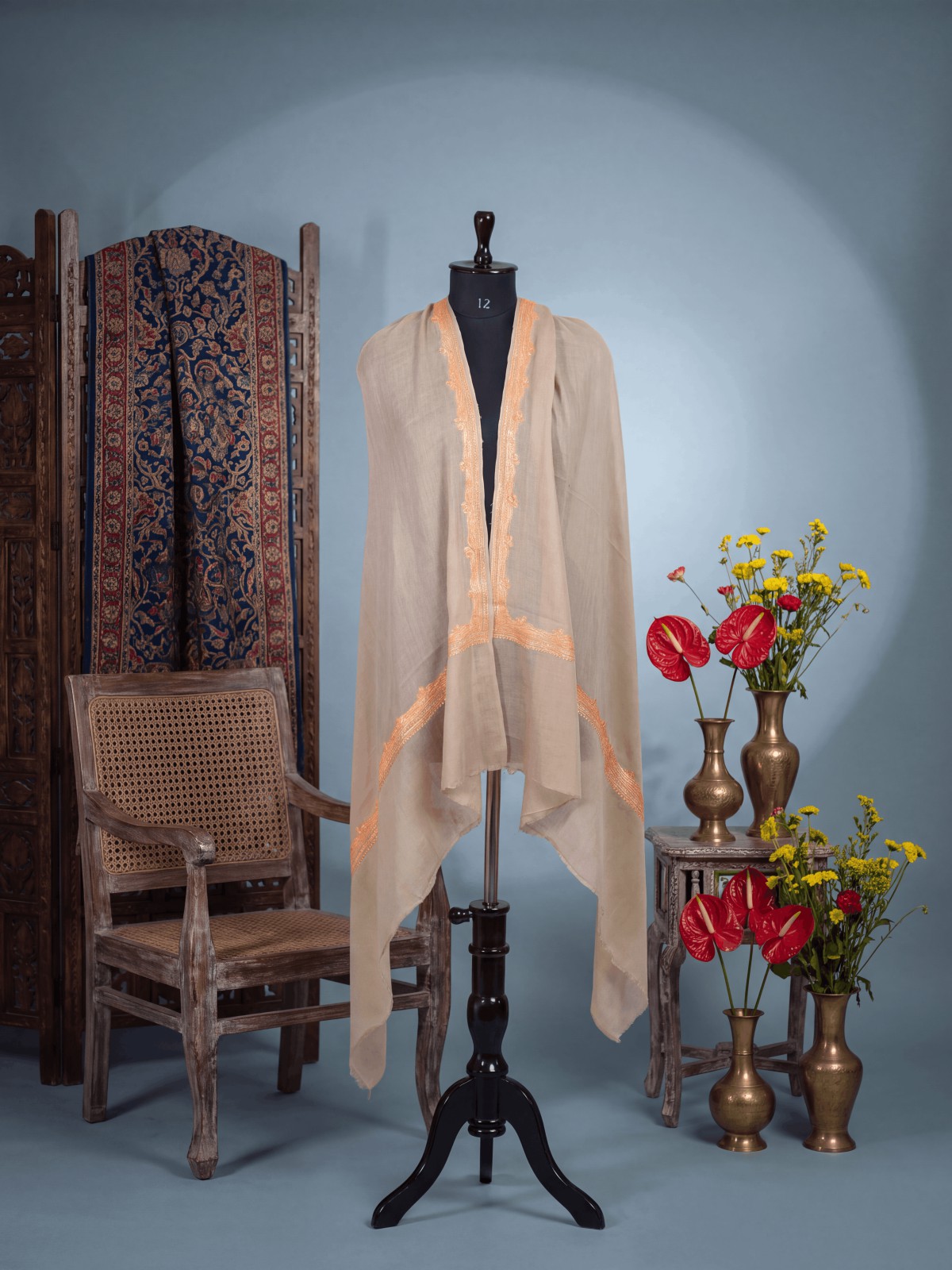
The boteh
The curved, teardrop form with a bent tip is the boteh — the motif the West came to call paisley, after the Scottish town that mass-produced imitations of Kashmiri shawls in the nineteenth century. The name travelled; the form is Kashmiri. You will find it worked at the fall of a shawl and repeated along a border on our Meraas pieces.
The tree of life
A single flowering tree, usually rising from a small mound and often populated with birds. It is among the oldest motifs in the region, and reads as abundance and continuity — apt for an object intended to outlast its owner.
Flowers and vines
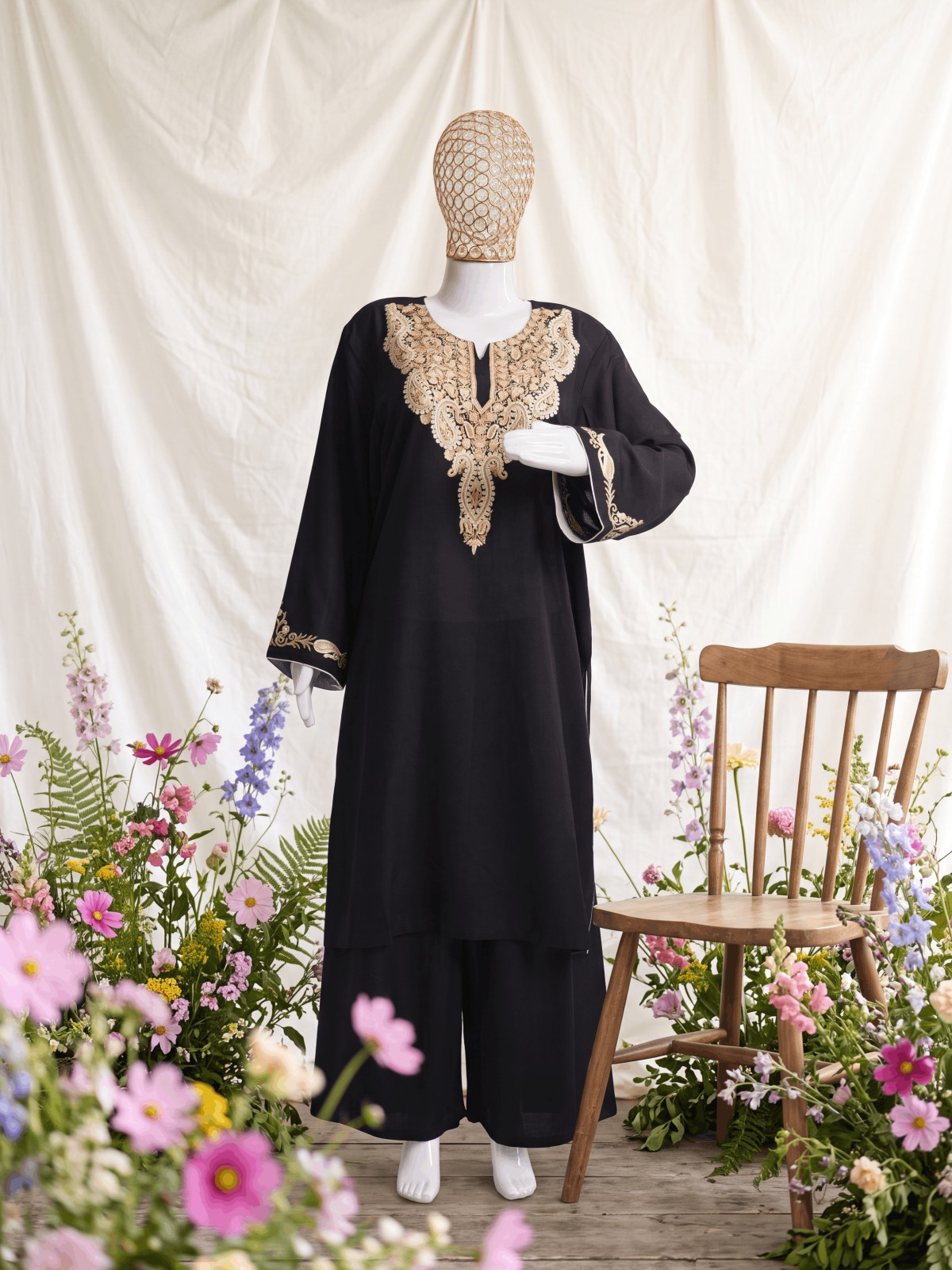
Almond and apple blossom, roses, irises and trailing vines recur constantly. On the Riwaayat suits the vine is often the whole design, running unbroken across the yoke and down the sleeve.
Why this matters when you buy
Motifs are a quick authenticity check. Genuine Kashmiri work draws on this vocabulary and renders it with confident, unhurried line. Mass-produced imitations tend to flatten the forms, repeat them mechanically, and lose the small asymmetries that show a person drew each one.
Leave a comment