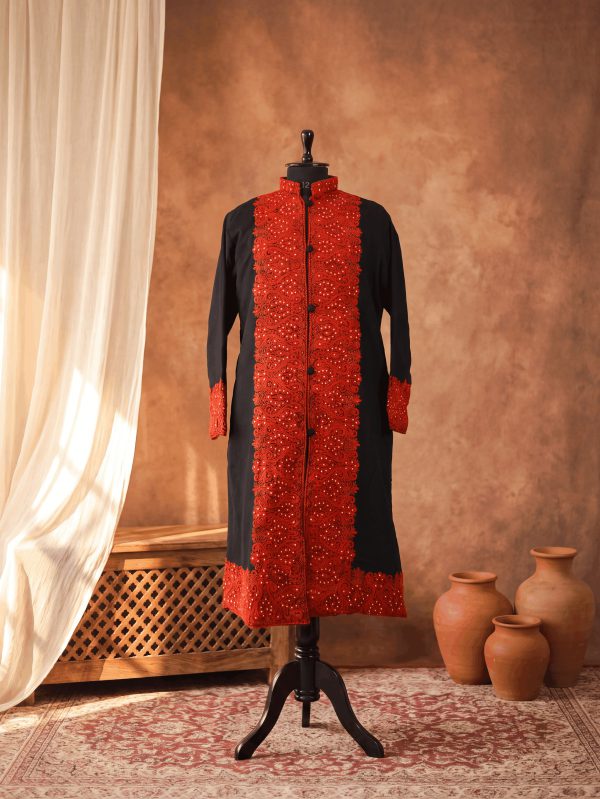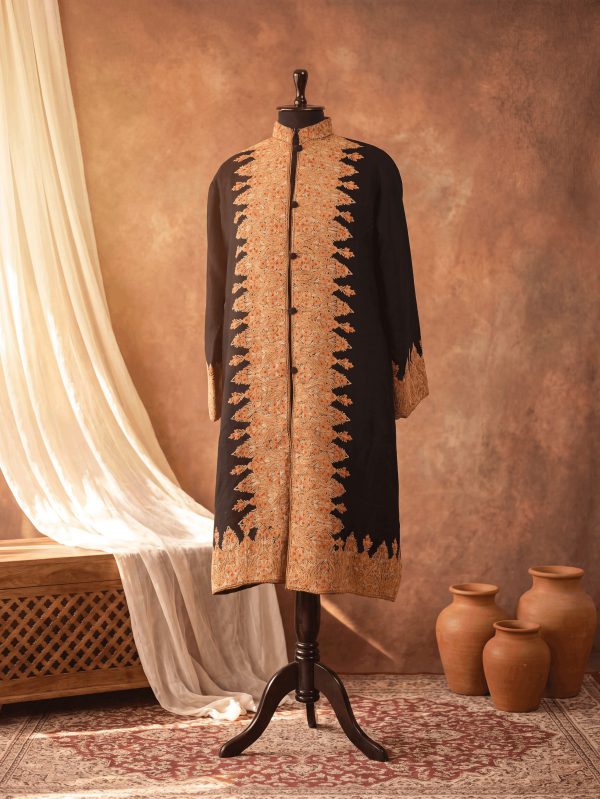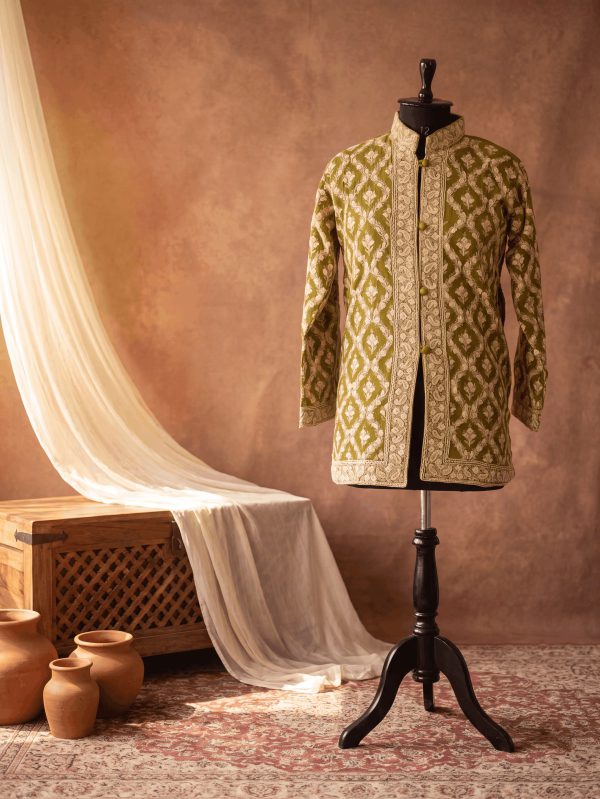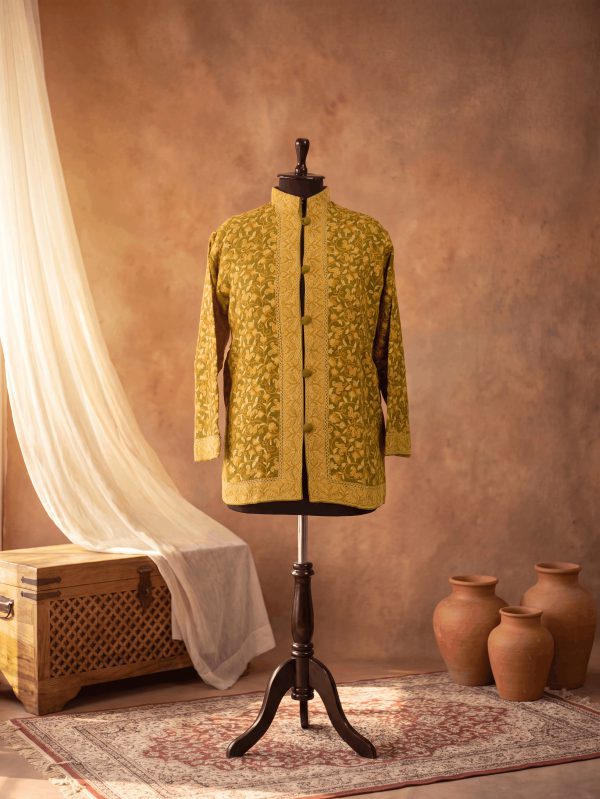
One line, never broken.
Aari embroidery is a single continuous chain stitch. Understanding that one fact tells you most of what you need to know about how these pieces are made — and how to tell them from an imitation.
Five stages, one thread
-
The frame
Cloth is stretched taut across a wooden frame. Tension is everything — slack cloth produces uneven loops, and no amount of skill afterwards will correct it.
-
The drawing
The design is traced onto the surface. From here the artisan is not inventing as they go; they are following a line that has already been decided.
-
The hook
A fine hooked needle is pushed through from above and catches the thread beneath, pulling up a loop. This is the moment that makes it Aari rather than embroidery in general.
-
The chain
Each loop locks into the one before it. Because the line never breaks, it can follow a curve — which is why Aari can draw a vine or a boteh where a straight stitch would break it into steps.
-
The finish
Ends are worked back through the reverse, and the piece is cleaned and pressed. Turn a good piece over: the back should be tidy, not a mass of loose thread.
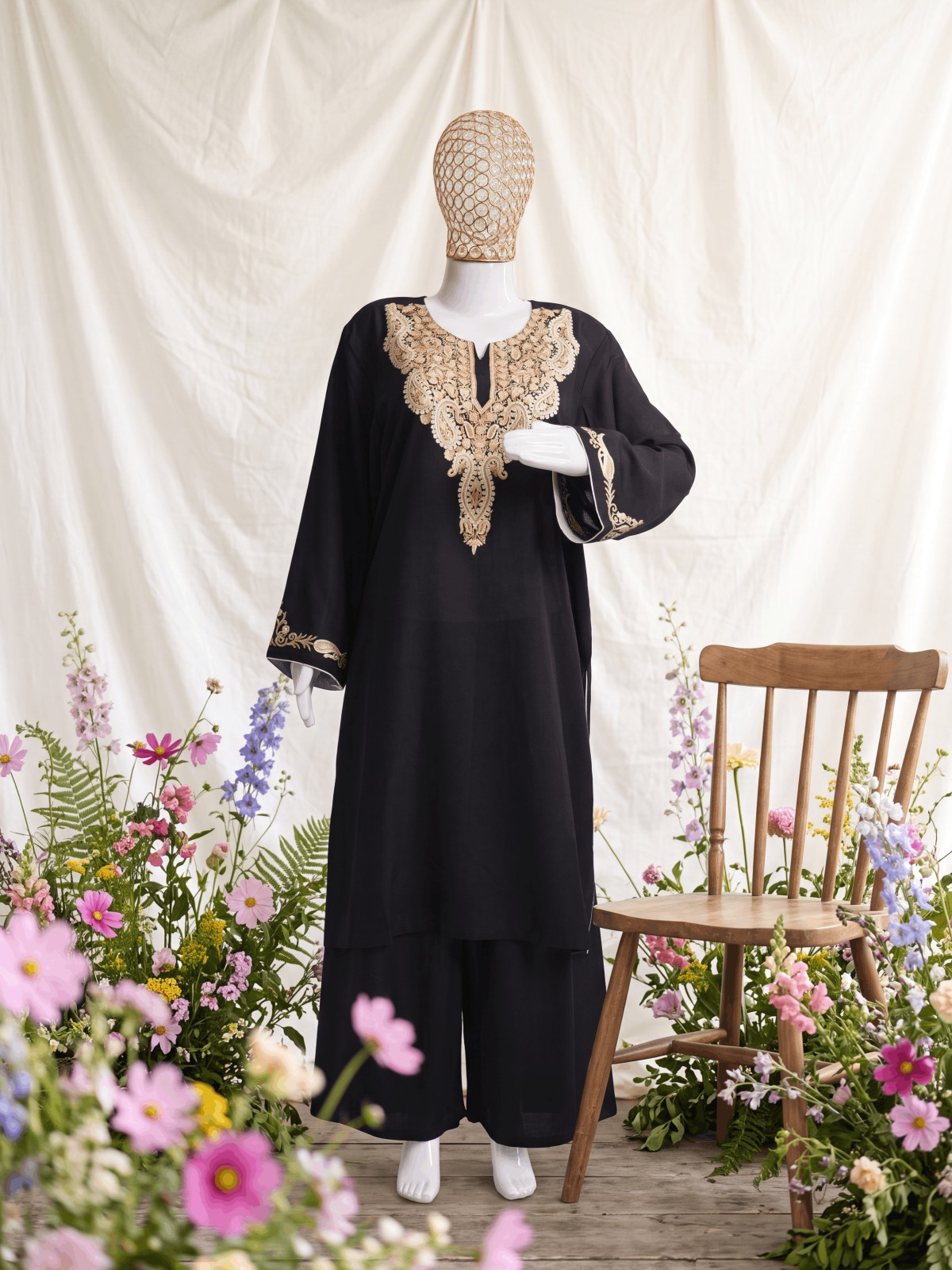
Why the hook matters
An ordinary needle makes separate stitches. The Aari hook pulls a continuous loop, so the artisan can follow a curve without lifting the line. That is why a vine on a Riwaayat yoke runs unbroken from the collar to the sleeve — and why it takes days rather than hours.
How to tell the difference
These are the checks worth making — on our pieces or anyone else’s. We would rather you knew them.
| Made by hand | Made to look like it |
|---|---|
| A line that keeps an even width as it curves. | Thread that thins and thickens where tension slipped. |
| Small asymmetries between one sleeve and the other. | Two sides that match exactly, motif for motif. |
| A tidy reverse, ends worked back in. | A backing cloth glued or stitched on to hide the mess. |
| Warmth out of all proportion to weight. | Bulk standing in for warmth. |
| A soft matte glow. | A hard, even shine across the whole cloth. |
| A seller who can tell you who made it. | “Handmade” with no one attached to it. |
The ring test is not proof. A fine shawl may pass through a ring — but so will some blends. Treat it as a hint, never as evidence.
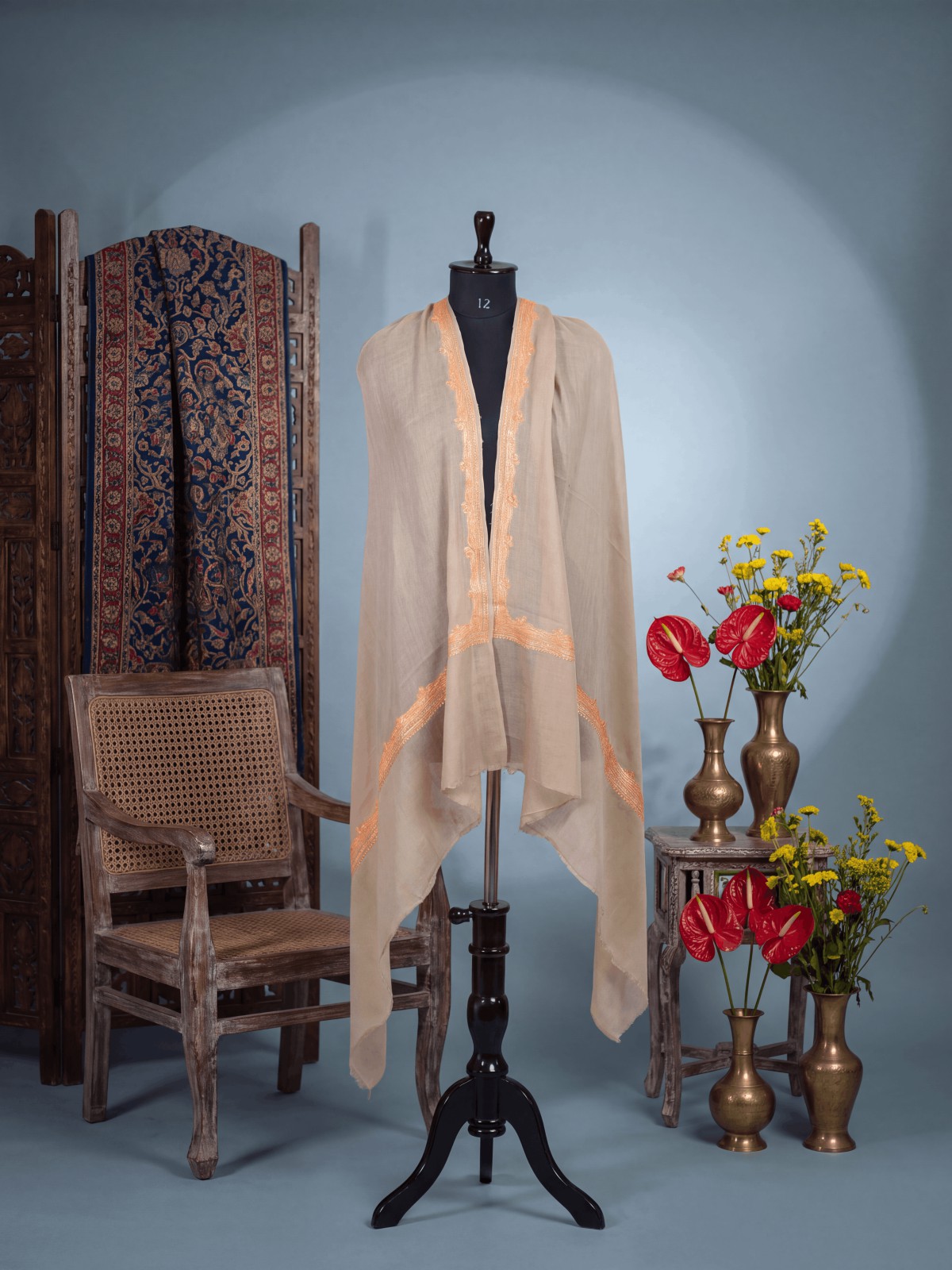
Pashmina, honestly
Pashmina comes from the combed undercoat of high-altitude goats. It is sorted by hand, spun by hand and woven by hand, because the yarn is too fine to survive a high-speed loom. Anything priced like a scarf was not made like one.
Made by hands we can name
We buy directly from the artisans who do the work rather than through layers of middlemen. That is what lets us tell you how a piece was made — and why 10% of our profits go straight back to those communities.
Look closely at the work