
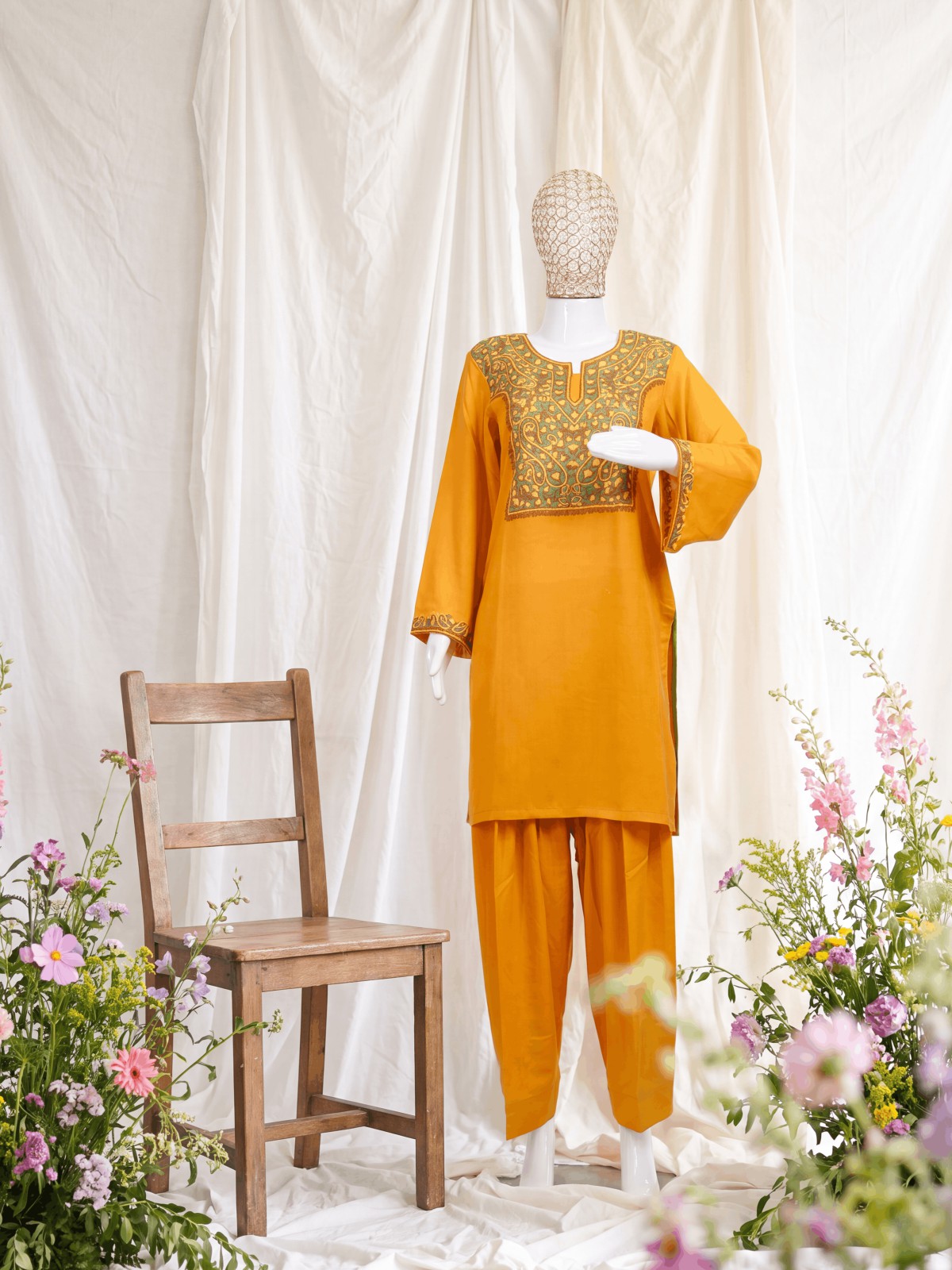
There is an uncomfortable fact behind most handmade luxury: the further a product travels from the person who made it, the more it is worth — and the less of that worth returns to them. A garment that takes weeks of skilled work can pass through many hands before it reaches a shop window, and the maker is usually paid first and least.
What we decided
At NOUR, 10% of our profits are dedicated directly to supporting artisan communities. Not 10% of a marketing budget, and not a campaign that runs for a season. A standing commitment, built into how the business works.
It funds the things that actually keep a craft alive: supporting artisan households, helping preserve techniques that take a lifetime to learn, and improving the conditions in which that work is done.
Why recognition matters as much as money
Ask most buyers of a fine embroidered garment who made it, and they will not know. The maker is invisible by default — and that invisibility is a large part of why these skills are disappearing.
So alongside the money, we are committed to giving artisans a distinct identity: naming the craft, explaining the process, and making clear that a NOUR piece is the work of a specific skilled person, not an anonymous factory.
The risk of losing the craft
Skills like Aari embroidery are transmitted person to person, over years. When a generation decides the work is not worth the wage, the chain breaks — and it does not easily restart. A craft can be lost within a single generation of neglect. Keeping it alive means making it a living worth choosing.
What this means when you buy
Every purchase supports a tradition. That is not a slogan added afterwards; it is the reason the business exists in this shape. When you buy a NOUR piece you are paying for skilled human hours, and a defined share of the profit returns to the community those hours came from.
True luxury is not defined by what we create, but by the lives we uplift and the legacy we preserve.
Leave a comment